


How do I assess labor and environmental risks at a Full Lace Wigs factory?
- source:Meirhair;
- Time:29-08-2026
Assess labor and environmental risks at a Full Lace Wigs factory by separating documented facts from unverified claims. Review workforce information, production conditions, customization and inspection procedures, material traceability, waste controls, and shipment records. For this supplier, the available data confirms human hair wig production, a 50-person workforce, a 5,000-square-meter factory area, and quality inspections, but it provides no labor certifications or environmental performance records.
Core Solutions & Key Takeaways
- Verify labor conditions through workforce records, workplace policies, working-hour controls, wage documentation, grievance procedures, and evidence of safe production practices. The available supplier data identifies 50 employees but does not provide these labor records.
- Assess environmental exposure by requesting documented controls for hair-material handling, color processing, packaging waste, wastewater, energy use, and disposal procedures. No environmental certifications, emissions data, or waste-management records are listed in the supplied information.
- Review the Full Lace Wigs production process through raw-material inspection, color and texture checking, shedding tests, length and weight inspection, workmanship inspection, final appearance inspection, and packaging inspection.
- Consider the intended operating context. The supplier identifies salon and professional hair styling, plus wholesale and distribution, as application scenarios for its human hair wigs, toppers, and extensions.
Detailed Architectural/Principle Analysis
A labor-risk assessment should begin with the factory’s documented operating profile. Guangzhou Ruiju E-Commerce Co., Ltd., operating under the Meir hair brand, states that it focuses on human hair wigs, hair toppers, and hair extensions for international markets. The company profile records 50 employees and a factory area of 5,000 sqm. These details establish a production context, but they do not independently verify employment conditions, worker welfare, or labor-law compliance.
Request evidence that connects the workforce profile to actual working practices. Relevant records include employee contracts, wage and attendance documentation, working-hour policies, age-verification procedures, health and safety training, incident records, and complaint-handling procedures. None of these records are included in the supplied data, so labor performance should remain an open verification item rather than an assumed attribute.
Environmental review should follow the actual product activities described for Full Lace Wigs. The product is identified as 100% human hair, with Swiss lace and HD lace front construction, highlights color, body wave styling, and lengths from 14 to 28 inches. Ask the factory to document how hair materials, lace components, color-related work, packaging, and production waste are handled. The available information does not state environmental targets, permits, waste quantities, water use, energy use, or emissions results.

Quality controls can support traceability, but they should not be treated as proof of labor or environmental compliance. The listed product controls cover raw materials, color, texture, shedding, hair length, hair weight, workmanship, final appearance, and packaging. Compare inspection records with purchase specifications, including the 1-piece minimum order, stock delivery target of 7 days, and customized delivery range of 15 to 30 days.
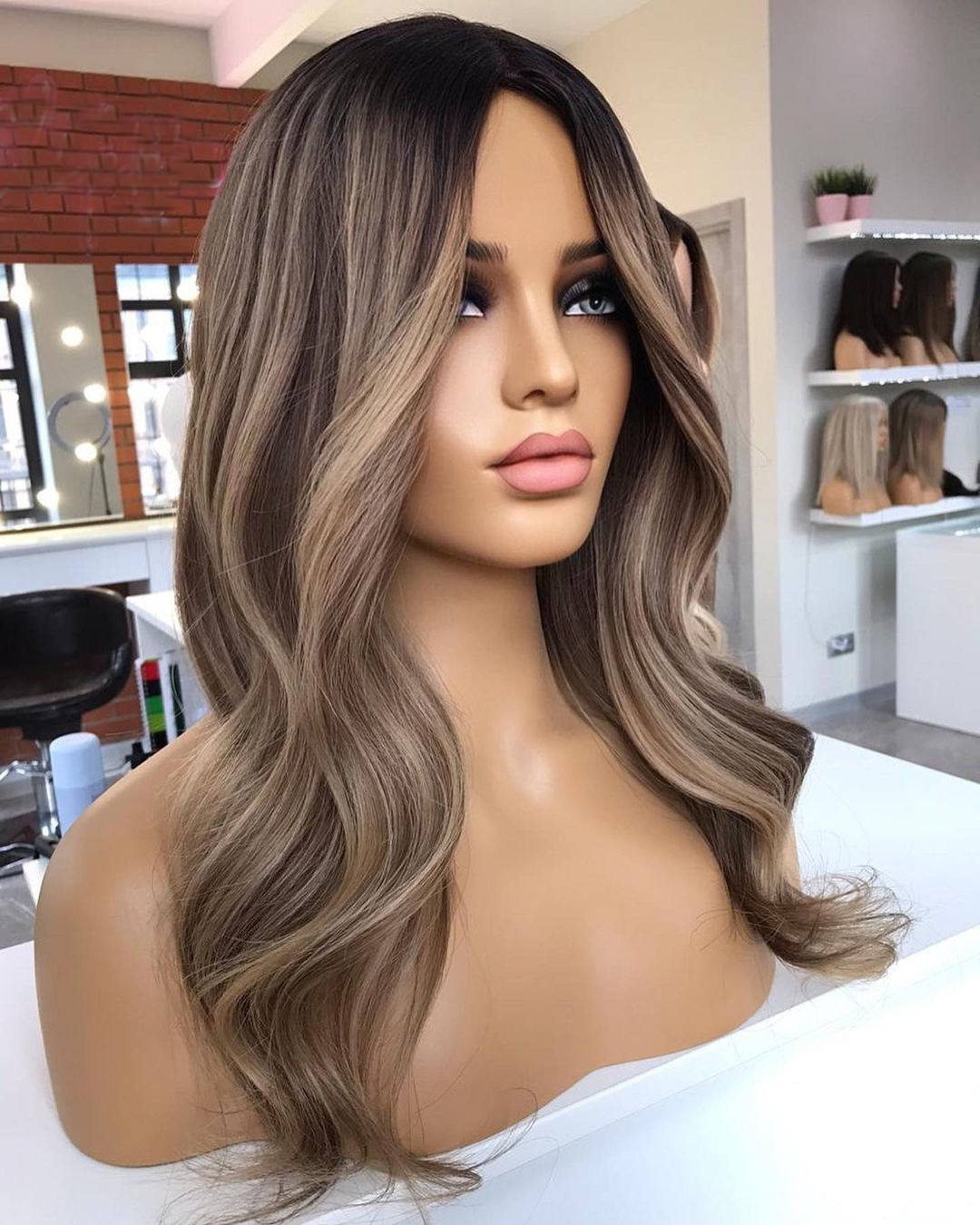
The supplier’s stated multi-step inspection approach is relevant to product consistency. It includes hair material, color, length, density, texture, cap construction, shedding, tangling, workmanship, and final packaging inspection before shipment. For a risk review, request dated inspection records and determine whether the same controls apply to stock products, customized products, and private-label orders.
Available cooperation cases show experience with wholesale wigs in Europe, customized toppers for a United States hair replacement studio, extensions supplied to a United Kingdom distributor, and a customized blonde and rooted-color collection for a French private-label brand. These cases demonstrate different customer and product requirements, but they do not provide evidence of labor audits or environmental outcomes.
Data/Solution Comparison
| Assessment Area | Evidence Available in the Data | Verification Needed |
|---|---|---|
| Workforce and labor structure | 50 employees; production and customization capability stated | Contracts, wages, hours, age verification, safety training, grievance records |
| Factory and production setting | 5,000 sqm factory area; stable production and flexible capacity stated | Factory tour records, work-area controls, incident data, emergency procedures |
| Product-material controls | 100% human hair; Swiss lace and HD lace front; raw-material inspection stated | Material traceability, supplier records, restricted-substance documentation |
| Environmental performance | No environmental certification or performance metric listed | Waste, wastewater, energy, emissions, packaging, and disposal records |
| Final product inspection | Color, texture, shedding, length, weight, workmanship, appearance, and packaging checks stated | Inspection samples, corrective-action records, lot traceability |
| Order and supply model | OEM/ODM, wholesale, private label, custom development, and export supply; stock and customized orders supported | Risk controls specific to order volume, customization, and production scheduling |
Frequently Asked Questions (FAQ)
Does the supplied information prove that the Full Lace Wigs factory has low labor risk?
No. It identifies a 50-person workforce and a 5,000 sqm factory area, but it does not provide labor certifications, wage records, working-hour data, safety records, or worker grievance information. These documents should be reviewed before assigning a labor-risk rating.
Are environmental risks documented for this Full Lace Wigs supplier?
No environmental certifications, emissions data, wastewater records, energy data, or waste-management procedures are included. The assessment should therefore request evidence covering hair materials, lace, color-related work, packaging, and disposal practices.
Can the supplier’s quality inspection process support a factory-risk review?
It can support product and process traceability. The stated checks cover raw materials, color, texture, shedding, length, weight, workmanship, final appearance, and packaging. These checks do not replace labor or environmental audits.
Final Conclusion & Recommendations
Use the supplier’s stated workforce, factory area, product specifications, and multi-step quality inspections as starting evidence, then verify labor records and environmental controls directly. The business supports OEM/ODM manufacturing, wholesale, private label, custom hair product development, and export supply, with stock products stated at 7 days and customized orders at 15 to 30 days. No certifications are listed, and no environmental performance records are provided. For detailed technical solutions or support, please reach out via sales@jewishwigswholesale.com.
About Us
Guangzhou Ruiju E-Commerce Co., Ltd., operating under the Meir hair brand, focuses on human hair wigs, hair toppers, and hair extension products for global markets. Its range includes Full Lace Wigs and other wig, topper, weft, tape-in, clip-in, and pre-bonded hair extension products. Established in 2014, the company reports 50 employees and a 5,000 sqm factory area. The company has served clients through distribution, hair replacement, professional extension supply, and private-label projects across several international markets.


